
Context
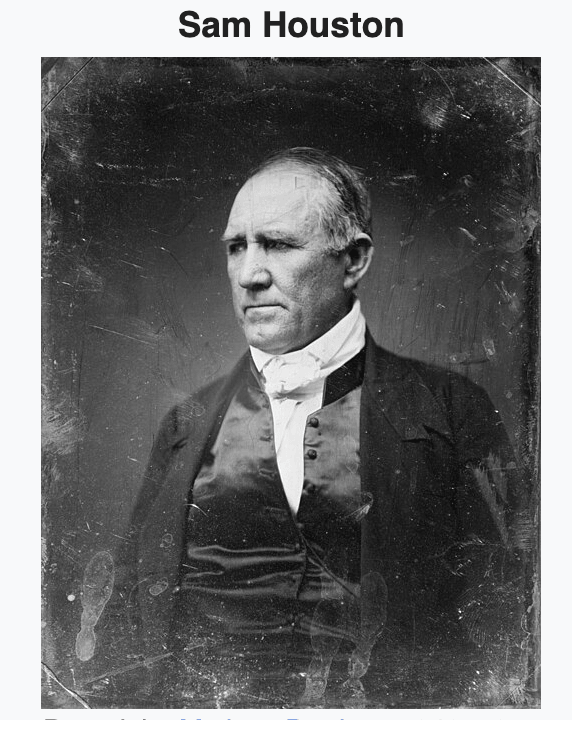
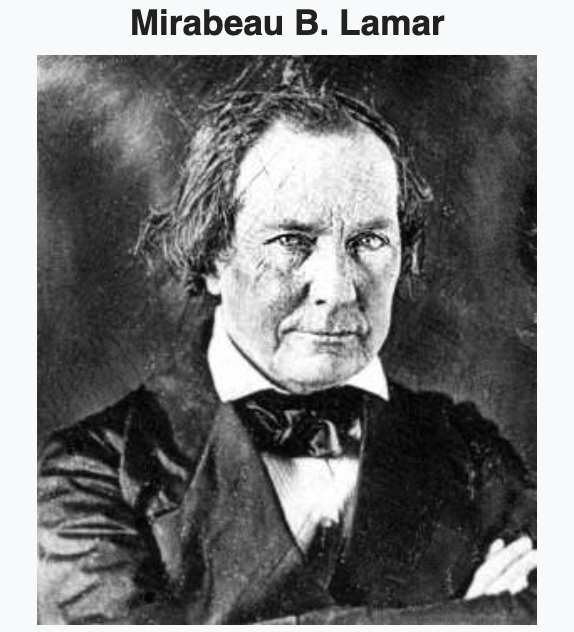
The political rivalry between Sam Houston and Mirabeau B. Lamar during the Republic of Texas era (spanning the two-year presidential election cycles of 1838 and 1841, as well as Anson Jones’s run in 1844) produced some of the most bitter, personal, and scathing documents in Texas history.
Because the 1836 Republic Constitution prohibited presidents from serving consecutive terms, Houston could not run directly in 1838. Instead, the political landscape devolved into personal character assassinations between the Houston Faction (pro-peace with Native Americans, fiscal austerity, U.S. annexation) and the Lamar Faction (aggressive expansion, war with Native tribes, anti-annexation).
Houston’s December,1840 letter to Lamar is just a single flame in a bonfire of discontent.
The Story
By December 1840, the young Republic of Texas was held together by little more than egos and hyper-inflated paper currency.
At the helm sat President Mirabeau B. Lamar—a romantic poet and expansionist who harbored an almost religious hatred for his predecessor, Sam Houston. Watching Lamar from the legislature was Houston himself, biding his time until the constitution allowed him to reclaim the presidency while gleefully sabotaging Lamar’s agenda at every turn.
Their feud was legendary, but Lamar escalated the rivalry to a new level when he moved the nation’s capital away from the city of Houston to a wilderness outpost called Austin. Houston utterly despised the new location, viewing it as an overpriced, dangerously exposed frontier village built as a monument to Lamar’s vanity.
As Lamar’s expansive dreams collapsed into near-bankruptcy and escalating border clashes, Houston used his legislative pulpit to publicly dismantle the administration piece by piece.
Driven to his absolute limit by the constant harassment, Lamar sent Houston a formal letter demanding he tone down his attacks and show proper respect to the presidency.
Houston’s iconic reply on December 1, 1840, was a masterclass in 19th-century passive aggression, informing Lamar that exposing his total incompetence wasn’t a personal insult—it was a public service. This venomous exchange set the stage for one of the most ruthless political showdowns in Texas history.
To Mirabeau B. Lamar
Austin, 1st Dec. 1840
Sir:
I have received your letter of yesterday, and in answer have to say, that I am not conscious of having used any language, or done any act, which could reasonably give offense to yourself, or any member of the Government, unless my opposition to measures, which I deem disastrous to the country, be construed as such.
If my free expression of opinions upon public men and public measures, in which the highest interests of the Republic are involved, is to be regarded as personal disrespect to yourself, I can only say, that I acknowledge no right in you or any other man, to question my privilege as a citizen or a representative, to speak my sentiments freely.
The condition to which your administration has reduced the country—the ruinous expenditure, the worthless currency, the border warfare, and the general distress of the people—are matters of public history and daily observation. They are subjects upon which I have spoken, and shall continue to speak, whenever I deem it proper to do so.
I have no personal hostility to gratify, nor any private ends to subserve. My conduct has been guided by a desire to promote the public welfare, and to preserve, if possible, the remnants of that prosperity which was achieved by the sacrifices of the early settlers of Texas.
If you suppose that I am to be deterred from the performance of my duty by any menace, official or personal, you have greatly mistaken my character.
Respectfully,
SAM HOUSTON
Houston, Sam. Letter to Mirabeau B. Lamar, December 1, 1840. Original manuscript in the Mirabeau B. Lamar Papers, Texas State Library and Archives Commission, Austin, Texas.
A conversation across time
Comments are welcome.
Write to Buck