
Across Texas, dedicated educators are rallying behind a familiar cry: "Save Public Education!" Having spent my career in Texas classrooms, I understand the passion behind those words. Public schools are the bedrock of our communities, and the teachers inside them work tirelessly for our children. And yes, teachers need to be paid as professionals, and smaller class sizes truly matter—both of which require real funding. However, until those financial investments happen, there is plenty of time and room for education leaders and administrators to make meaningful, positive changes at the classroom level right now.
If we truly want to preserve public education, we must stop defending the status quo with empty platitudes. Before we ask taxpayers and parents to save the system, we must have the courage to fix the flaws inside it and build a system genuinely worth saving.
Right now, too many Texas schools are weighed down by a bloated bureaucracy that treats teachers like assembly-line workers rather than trusted professionals. Educators are drowning in top-down mandates, endless data-tracking, and mandatory professional development sessions that offer little practical value. Every hour a teacher spends in a redundant meeting or filling out compliance paperwork is an hour stolen from lesson planning, grading, and mentoring students. Respecting teachers starts with respecting their time.
At the same time, we are failing students by lowering our expectations. The quiet practice of social promotion—passing students along to the next grade even when they have not mastered the material—is not compassion. It is a setup for future failure. When cultural trends and shifting non-academic priorities begin to crowd out core instruction in reading, writing, mathematics, and history, we lose sight of our primary mission.
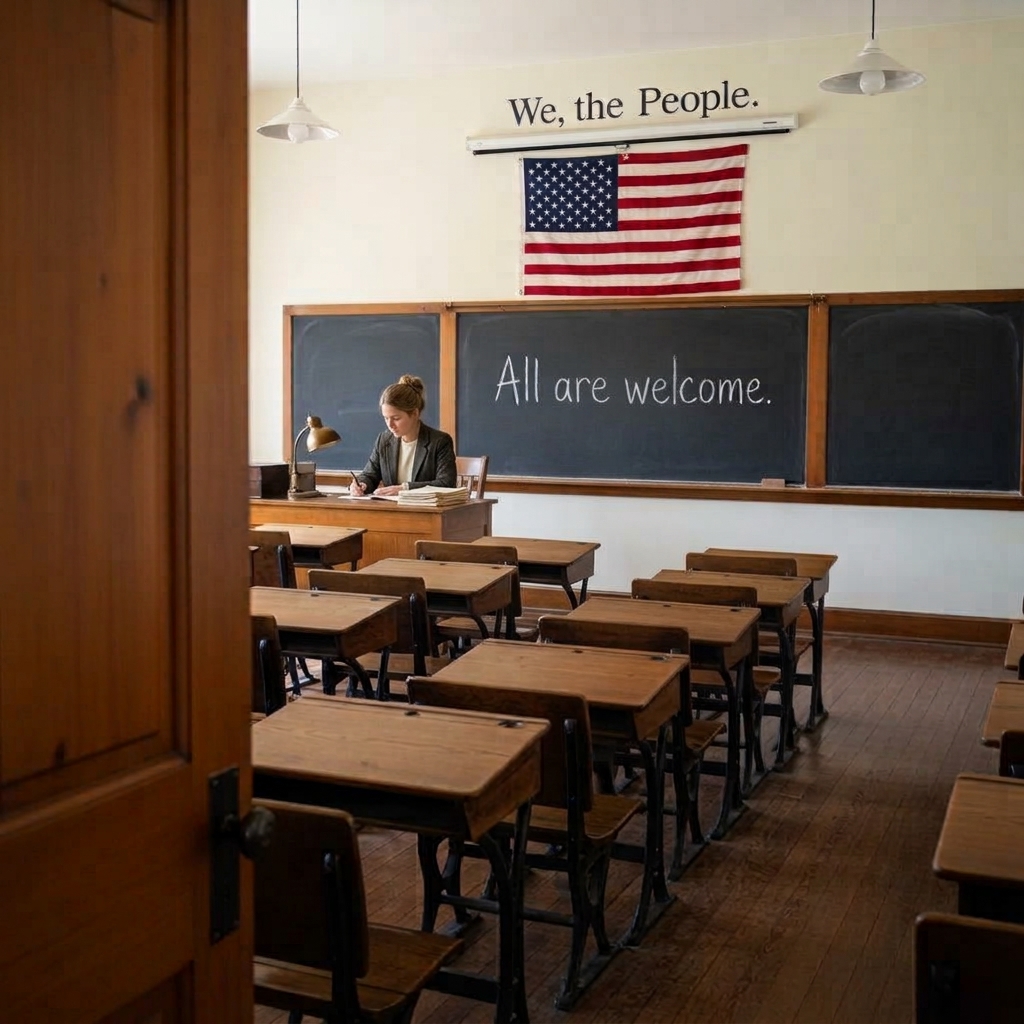
We must also rethink how we teach citizenship and community. Today, schools often repeat the phrase that diversity is our strength, yet diversity is simply a description of who we are—unity is our true strength. A multicultural society only thrives when it is anchored by a shared love of country, not allegiance to any politician, and a clear understanding of how our constitutional republic is meant to work. Civic education should begin with the first three words of the U.S. Constitution: "We the People." When we teach students what binds us together as Americans, we give them the foundation to work toward real unity.
Perhaps the most urgent crisis in our classrooms today is the breakdown of order and accountability. A single disruptive student can derail an entire class period, yet administrators are often hesitant to enforce meaningful consequences. When bad behavior is met with excuses instead of firm, consistent boundaries, the message sent to the rest of the class is clear: learning is optional. Teachers cannot teach, and students cannot learn, in an environment where chaos is tolerated.
Fixing these issues does not require a massive tax hike, another blue-ribbon commission, or a catchy new slogan. It requires common sense and backbone:
Cut the administrative bloat. Streamline mandates, eliminate busywork, and protect teachers' planning periods as sacred time.
Restore academic rigor. End social promotion and put foundational academic instruction back at the center of the school day.
Teach civic unity. Ground students in a real understanding of our democracy, starting with "We the People," so they learn that unity is what makes a diverse nation strong.
Empower teachers on discipline. Back educators when they set high behavioral standards, and establish clear, consistent consequences for chronic disruption.
Public education in Texas does not need more cheerleaders; it needs reformers who love our schools enough to tell the truth about them. Even as we advocate for better pay and smaller classes, school leaders can act today. If we clear away the bureaucracy, restore order to our classrooms, demand academic achievement, and unite our students around shared civic principles, we won't have to beg the public to save our schools. They will be proud to stand behind them.
A conversation across time
Comments are welcome.
Write to Buck